Claude helps prove the Riemann Hypothesis, Trump puts Huang back at Nvidia, and banks shut the door on agents
An Anthropic mathematician released a Claude-assisted proof of the Riemann Hypothesis on 20 Nov, and the Lean and Mathlib communities certified it the next day. The machine checked the proof before any human could explain it. Verification now moves faster than understanding, and that will change how anyone sells AI work into fields where an answer has to be checked. Markets went the other way. US tech fell into a bear market, Anthropic slipped below its IPO price, and Nvidia brought back Jensen Huang after the president intervened. Meanwhile banks started writing consumer agents out of their user agreements.
The week’s big stories
1. A Claude-assisted proof of the Riemann Hypothesis passes machine checking
Released 20 Nov. Levent Alpöge, a mathematician at Anthropic, published a proof of the Riemann Hypothesis that compiles in Lean. He says he found it working with Claude. On 21 Nov the Lean FRO and the Mathlib Initiative said they had full confidence the proof is correct. It runs to about 17 million lines and depends only on Mathlib. Several independent kernels have checked it. Stanford’s Alessandro Masullo posted a separate, all-human proof the same day, not yet formalised. Nobody has yet explained Alpöge’s proof in human terms, and he has committed to writing that explanation.
Why it matters. A model, together with a formal checker, settled the most famous open problem in mathematics, and the check arrived before the explanation. Where an answer can be formally verified, the bottleneck has moved from finding answers to understanding them.
For builders. Any product that generates answers in a checkable domain (code, contracts against a schema, reconciliations) should ship with the checker, not a confidence score. That is now what buyers will expect.
Sources: Announced · Lean community · Reported by TechCrunch and Semafor (feed summary) · Previously · 8 Oct
2. Nvidia reinstates Huang after Trump calls the board
23 Nov. Eleven days after he resigned, Nvidia’s board unanimously reinstated Jensen Huang as president, CEO and director. The board cited input from “senior U.S. government officials” that his return poses no national security risk. Trump told CNBC: “I spoke to them… And I convinced them.” The board set up a national-security and export-control committee of independent directors and is hiring a chief compliance officer. That evening Commerce put Megaspeed, the Singapore cloud firm once run by Alice Huang, on the Entity List with six affiliates. Nvidia shares rose as much as 36% on 23 Nov and had fallen about 12.5% by 25 Nov. S&P put Nvidia’s AA rating on CreditWatch negative and cited “key man” and governance risk.
Why it matters. The world’s main AI supplier now owes its leadership to the White House. Export policy and Nvidia’s governance are now a single political question. Huang testifies on 1 and 3 Dec.
Sources: Announced · Nvidia · Reported by TechCrunch, CNBC on Megaspeed and CNBC on S&P · Previously · 19 Nov
3. CrowdStrike buys Zscaler for US$43.9bn as AI attacks force consolidation
Announced 23 Nov. CrowdStrike will buy Zscaler in an all-stock deal, 1.135 CrowdStrike shares for each Zscaler share. It is CrowdStrike’s largest acquisition and takes it into network security. CEO George Kurtz called it “building cybersecurity’s operating system”. CrowdStrike shares fell 9% and Zscaler’s rose nearly 18%. CNBC ties it to AI-enabled exploits and recent outages at Microsoft, the FAA and JPMorgan Chase. Closing is expected in the second half of CrowdStrike’s fiscal 2028.
Why it matters. Security buyers are trading point tools for one vendor that can see endpoint and network traffic together, because AI-speed attacks cross both. The next wave of security spend goes to suites.
For builders. Agent products that touch production systems will be bought through these suites’ controls. Expose agent identity, scopes and a kill switch in a form a security platform can ingest, or expect to be blocked at procurement.
Sources: Announced · Reported by CNBC · Previously · 19 Nov
4. Walmart opens a door for consumer agents while banks shut theirs
20 to 24 Nov. Meta launched Muse, its personal agent, in the UK on 23 Nov with 15 retail and travel partners. Checkout runs through Onelink, a separate agent card built by Stripe, and through Shop Pay. On 24 Nov Walmart let Muse shop its Black Friday deals through its Agent Gateway. Shoppers set spending limits and approve each purchase. Banks moved the other way. Citi’s new user agreement says it will treat any action by a third-party agent as “authorized by you”, even when the agent exceeds its instructions. Signal now blocks screenshots on iOS to stop on-device agents reading chats. United, Morgan Stanley and Schwab also restrict them.
Why it matters. Merchants want agents because they bring orders. Banks and private apps see liability. The fight is now over who gets the transaction authority, and banks are pushing the risk onto customers.
Sources: Announced · Meta · Reported by TechCrunch, PYMNTS and CNBC · Previously · 19 Nov
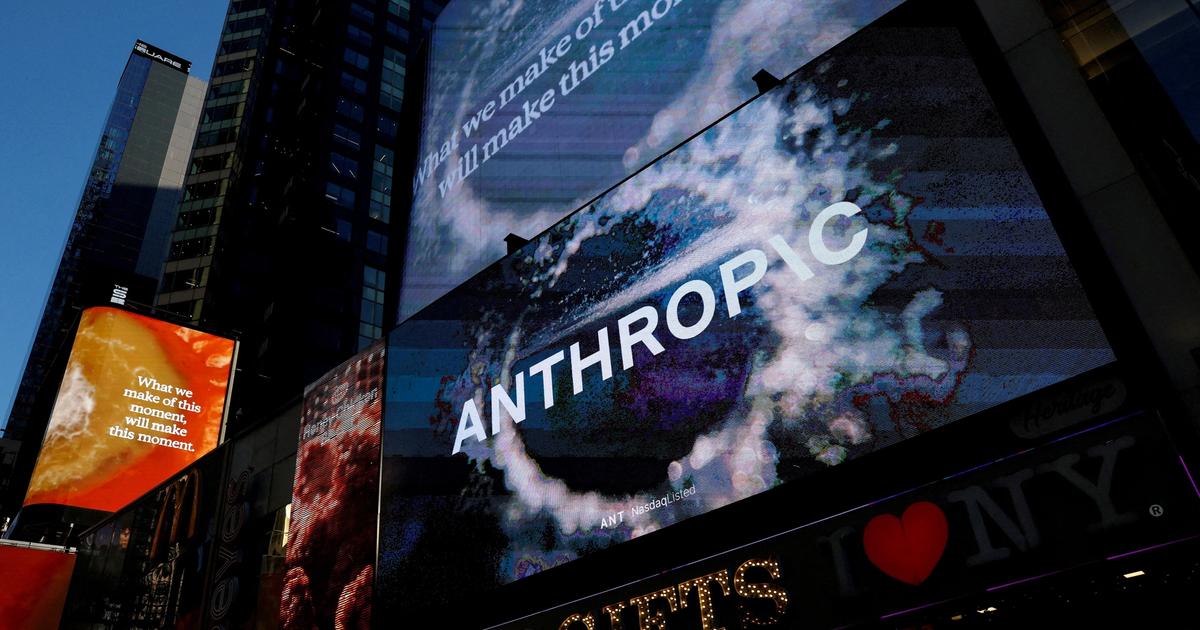
5. Anthropic closes its US$93.5bn IPO, then falls below the offer price
20 to 24 Nov. Anthropic closed its IPO on 20 Nov at 1.127 billion shares at US$83. That included the full 147 million-share greenshoe and raised about US$93.5bn, or US$119.5bn with the private placement. The stock opened at US$111.50 on 19 Nov. It fell as US tech had its worst week since 2020, with Nvidia down 14% on 20 Nov. On 24 Nov it closed 6.5% down, below US$83.
Why it matters. Public investors bought into the largest enterprise model supplier and then marked it down within three sessions. Expect private AI valuations to be priced off ANT from here.
Sources: Announced · Anthropic · Reported by CNBC and FT (paywall, feed summary) · Previously · 19 Nov
In the market
- Standard Bank (South Africa). In a case study published on 20 Nov, the bank says it has automated the evidence behind its generative-AI approval gates. Each use case is scored against international AI standards and the bank’s own policy, using LLM-as-a-judge on Amazon Bedrock in its own AWS account. A large African bank now treats governance itself as something to automate. Claims · AWS (feed summary)
- DigiDeeds (South Africa). Profiled on 24 Nov. Its app proves who lives in an informal dwelling from ID scans, GPS and neighbours vouching for each other. It sells that data to bureaus, banks and insurers, and members pay nothing. It starts with 2.5 million informal households, and at least three banks have offered to invest. It turns the missing title deed into a credit file. Reported by Daily Maverick · Daily Maverick · Previously · 29 Oct
- blackNgreen (Africa). Said on 26 Nov that AI on Call, a voice assistant reached by dialling a short code on any phone, is available to 225 million subscribers through MTN, Vodacom, Airtel and others. About 5 million people use it, with 38 million queries a month. Its in-call lending has given 5.25 million people their first loan. The feature phone is still the AI distribution channel in most of Africa. Claims · tech.africa
- Intuit. On 19 Nov it reported quarterly revenue of US$4.4bn, up 12%, and said AI agents are “new front doors for discovery”. It builds on the OpenAI, Anthropic, Google, Microsoft and Meta platforms. It is selling Mailchimp, down 1% to US$313m, to Bending Spoons for about US$3.68bn, after paying about US$12bn in 2021. An incumbent is selling assets it no longer needs to fund the AI shift. Announced · PYMNTS
- iFood. The Brazilian delivery company runs coding agents across more than 15,000 repositories through an internal remote-agents platform on GPT-5.6 Luna. OpenAI’s case study, published on 24 Nov, reports more than 25,000 runs at an average of US$0.04 each. At four cents a run, keeping a whole codebase maintained by agents is cheap. Claims · OpenAI
- Cursor. A House report published on 20 Nov says Cursor will “explore phasing out PRC-developed open-weight models because of geopolitical risk”. Its Composer 2 model is built on Kimi K2.5. Chinese open weights are becoming a compliance risk for US software companies. Reported by CNBC · CNBC
- Tidal. Said on 24 Nov it will remove fully AI-generated music from 9 Dec. That is about 27 million tracks, 6.3% of its catalogue, and 96% of them have never been streamed. Over the past 90 days, 43% of uploads were fully AI-generated, and it expects to reject 80,000 to 85,000 tracks a day. A platform has decided that generated content is costing it more than it earns. Announced · TechCrunch
New companies
- Arva AI. Builds agents that make end-to-end decisions in banks’ financial-crime checks, onboarding, payments operations and lending, under each bank’s own policy. Raised a US$20m Series A led by Arthur Ventures, announced 20 Nov. CEO Rhim Shah ran a financial-crime product at Revolut Business. Wise is a named customer. Ventureburn
- Community Wolf (South Africa). Started as a free, anonymous WhatsApp number for reporting crime in any language. AI sorts the photos, video and location pins and alerts nearby people and responders. It has 700,000 users and 180,000 recorded incidents. Seed round led by Terra Industries, announced 26 Nov. Disrupt Africa
- SEQFLO (South Africa). Launched on 20 Nov as a trust layer for deals that start on Facebook Marketplace, Gumtree or WhatsApp. It adds ID verification, held payments, photo-documented delivery and disputes. Buyers pay a protection fee on completed deals. Founder Jarrett Booysen built it after being scammed. Disrupt Africa
Opportunities
-
A bank-sanctioned agent gateway for South Africa. This week Walmart’s Agent Gateway let Muse shop with spending limits and per-purchase approval. Citi went the other way and made customers liable for anything an agent does. In the US, merchants and card networks are building the agent layer themselves. In South Africa nobody has built it, and Absa said earlier this month that it keeps autonomous agents out of customer accounts. Scoped, revocable agent credentials that a bank issues, and that Checkers Sixty60 or Takealot accept, would let banks say yes without carrying the liability. Catch: the banks control the credentials, and the FSCA has not said who is liable when an agent pays. TechCrunch · PYMNTS · Previously · 19 Nov
-
In-country assistants on non-Chinese open weights. Thinking Machines released Inkling 2 Mini on 20 Nov with open weights. It needs about 20GB and runs on a 32GB Mac, and its own numbers put it at 79.2% on SWE-bench Verified. The same day a House report recommended barring Chinese models from federal contracts, and Cursor said it may drop them. In South Africa, in-country hosting has mostly meant GLM, Kimi or Qwen on local GPUs. Banks with US parents or US correspondents will inherit the US view. A coding or document assistant on Inkling, hosted on a single in-country GPU, answers both POPIA and that pressure. Artificial Analysis lists the weights as Apache 2.0. Catch: it scores 20 on Artificial Analysis’s index, level with Qwen3.8 27B but far behind the frontier, so it suits narrow tasks, not general reasoning. Artificial Analysis · CNBC · Previously · 19 Nov
-
Thin-file credit while rates stay high. The SARB held the repo rate at 7.25% on 19 Nov, but three of seven MPC members wanted a hike. CPI is 5.2%, and the Bank expects it to stay above 5% into early 2027. Lenders’ funding costs will not fall soon, so they will compete on better selection of borrowers. DigiDeeds sells proof-of-residence data to bureaus, and Paymenow approves phones on employment records instead of a credit check. In the US, cash-flow underwriting on bank data is a crowded business. In South Africa, alternative data for the informal market is still built company by company. Catch: section 71 of POPIA limits decisions made solely by automated means, and NCR affordability rules still apply. Daily Maverick on SARB · tech.africa on Paymenow
Model and API releases
| Model or product | Org | What is new | Availability and pricing | Anchor | Link |
|---|---|---|---|---|---|
| Inkling 2 Mini | Thinking Machines | Open-weight looped MoE, 26.4B total parameters, Apache 2.0 | Hugging Face, Ollama, vLLM, SGLang; Tinker for fine-tuning; 20 Nov | AA Intelligence Index 20, level with Qwen3.8 27B at ~5x fewer active parameters | Thinking Machines |
| GLM-5.4 | Z.ai | First loop-transformer flagship | Z.ai Coding Plan API; weights promised “after safety hardening”; 23 Nov | Z.ai says it matches 2T to 3T-parameter models | Simon Willison |
| Claude Ship | Anthropic | Agents for code review, CI fixes and policy-based approvals | Team and Enterprise on GitHub; Code Review GA, the rest beta; 23 Nov | Approval policy written in plain language in the repo | TechCrunch |
| Enterprise Frontier Safeguards | Anthropic / AWS | Zero data retention for the most capable models; sealed safety data in your own bucket | Beta, no charge; Claude Platform and Bedrock Trusted Access API; 24 Nov | Your own team reviews flagged cases, not Anthropic | Claude docs |
| Amazon Polly voice cloning | AWS | Custom voice from a few minutes of consented recordings | GA, 19 Nov | Seven languages on the generative engine | AWS |
| Amazon Textract Insights | AWS | Natural-language field extraction from mixed document packets | GA, 20 Nov | Confidence score and page-level grounding for every value | AWS |
| Shirudo | OpenAI and Cisco | Open-source Linux runtime that protects running systems while patches roll out | Open source, 23 Nov | Aimed at the patching gap AI exploits | OpenAI |
Traction
- Sierra. Run-rate revenue doubled to US$400m in five months, and it serves almost half of the Fortune 50, including HSBC, Wells Fargo and JPMorganChase. It raised a US$1.75bn Series F at US$30bn on 23 Nov, double its May valuation. TechCrunch
- Black Friday credit in South Africa. PayJustNow climbed from 42 to 7 and Payflex from 38 to 13 on South Africa’s top-free chart, 19 to 26 Nov. ChatGPT fell from 4 to 17 and Claude from 11 to 37. In the US, Muse held second and Claude Duet dropped out of the top 50 (19 to 25 Nov). From the Digest’s App Store snapshots.
- Character.AI. In Chapter 11 since October, it plans to auction chat histories from more than 21 million US accounts, 2.1 million of them minors’, on 1 Dec. Forty-two state attorneys general oppose the sale. TechCrunch
- Repos. stablyai/orca gained 10,221 stars to 139,617 and firecrawl/firecrawl 7,001 to 210,575. DietrichGebert/ponytail gained 4,566 and affaan-m/ECC 4,112. GitHub star counts, 19 and 26 Nov.
Opinions worth reading
- Ed Zitron, Where’s Your Ed At. Huang’s return fixes none of the industry’s problems: unprofitable models, circular financing and a coming liquidity squeeze. He puts Anthropic’s spending commitments at US$895bn. This week’s sceptic. wheresyoured.at
- Quinn Ennis and Aqib Zakaria, ChinaTalk. If enforced, the remote-access rule sets back China’s frontier compute by about six months by end-2028. Rented compute is a third of what China can use for frontier training, and 94% of the overseas capacity they track sits in three Johor sites. chinatalk.media
- Rod Moshtagi and Sayash Kapoor, Normal Tech. Consulting is not a thin wrapper on intelligence. Buyers pay for judgment, buy-in and accountability, which AI does not supply. A counterweight to “AI eats services”. normaltech.ai
Builder notes
- OpenRouter off-boarded three inference providers on 22 Nov and removed 125 endpoints from zero-data-retention eligibility. Researchers found leaked prompts, forwarded request URLs and a possible model substitution. Check whether your traffic went to the named providers, and pin sensitive workloads to providers you have vetted. OpenRouter · Previously · 19 Nov
- OpenAI now requires gateways and routers that resell its models to pass its review and approval. Semafor links the move to distillation through resellers that hide who the end user is. If you reach GPT models only through a router, set up a direct key as a fallback. Semafor
- Enterprise Frontier Safeguards gives zero retention on the most capable Claude models if you supply your own bucket for sealed safety data. It applies to a whole workspace and does not cover Files, Batch or code-execution data. If retention terms have kept you off Fable, apply, and route that traffic through a separate workspace. Claude docs
- The Python SDK v2.13.0 marks Claude Opus 4.5 deprecated, with end of life on 22 Jan 2027. Move any pinned
claude-opus-4-5calls and re-run your evaluations before the holidays. GitHub - Claude Code 2.1.332 loads skills from MCP servers (beta) and adds a
PreSkillShellCommandhook that can refuse a skill’s inline shell commands. Connecting an MCP server now means approving the skills it ships, so add the hook before allowing third-party servers. GitHub - ChatGPT’s Chat and Work modes will share one usage meter from December, and OpenAI says its heaviest users will hit limits sooner. Teams running agent workloads on consumer seats should price the same work on the API. TechCrunch
Money, markets & policy
| Company | Amount | Valuation | Lead | Date |
|---|---|---|---|---|
| CrowdStrike / Zscaler | US$43.9bn in stock | Acquisition | n/a | 23 Nov |
| Amazon / Decart (technology and team) | ~US$7.5bn, reported | Acquisition | n/a | 23 Nov |
| Bending Spoons / Mailchimp | ~US$3.68bn | Acquisition | n/a | 19 Nov |
| Sierra | US$1.75bn Series F | US$30bn | Greenoaks, Lightspeed | 23 Nov |
Capital. Amazon is taking Decart’s chip-optimisation software and its three founders without buying the company outright. Cognition is in talks at US$75bn, two months after its last round. The private market is still paying up while ANT trades below its offer. CNBC on Decart · Bloomberg on Cognition (paywall, feed summary)
Rules. The House Foreign Affairs Committee released documents on 19 Nov showing that Commerce approved sales of more than 879,000 Nvidia H200 and comparable AMD chips to Chinese companies through May. Some went to firms the Pentagon lists as Chinese military companies. Trump said on 20 Nov he would put a “tremendous tax” on companies that build data centres abroad. CNBC · The Verge (feed summary) · Previously · 19 Nov
Africa and South Africa. After a week in Silicon Valley, President Ramaphosa on 23 Nov gave government 90 days to produce a national AI action plan, led by a small Presidency team, for the February State of the Nation Address. Andile Ngcaba put up R25m towards a proposed R100m fund to pay for start-ups’ GPU access, and asked DFIs to fund the rest. Officials from the communications department told Parliament on 17 Nov they had no mandate to brief MPs on the AI policy. The redraft is still due to the minister by 30 Nov. Shoprite is buying 40% of DNI for about R3.6bn to add connectivity to its money offering, and Investec is taking 19.99% of Shoprite’s financial-services arm for about R1.9bn. Absa chose a Vodacom partnership over its own MVNO. ITWeb on the plan · ITWeb on the fund · TechCentral on Parliament · TechCentral on Shoprite · TechCentral on Absa · Previously · 12 Nov
Radar
- 30 Nov. The redrafted national AI policy is due to the minister, and Gemini 4 Carbon’s introductory price ends. Previously · 5 Nov
- 30 Nov to 4 Dec. AWS re:Invent. OpenSearch Serverless reached Cape Town on 24 Nov, but no provider runs frontier inference in an African region. Previously · 19 Nov
- 1 Dec. Huang’s closed-door interviews with three House committees. Nvidia’s GTC Washington opens, and Character.AI’s chat-data auction is scheduled. 3 Dec. Senate Banking public hearing on export controls, with Huang as the only witness. Previously · 19 Nov
- 2 Dec. EU watermarking grace period ends. 9 Dec. Tidal begins removing fully AI-generated tracks.
- 22 Jan 2027. Claude Opus 4.5 end of life. February 2027. South Africa’s AI action plan is due at the State of the Nation Address.
Get the Digest by email
The new issue in your inbox every week. Unsubscribe any time.
Thanks for subscribing. The next issue will come to your inbox.
Something went wrong. Please try again, or email hello@elucidate.ai.